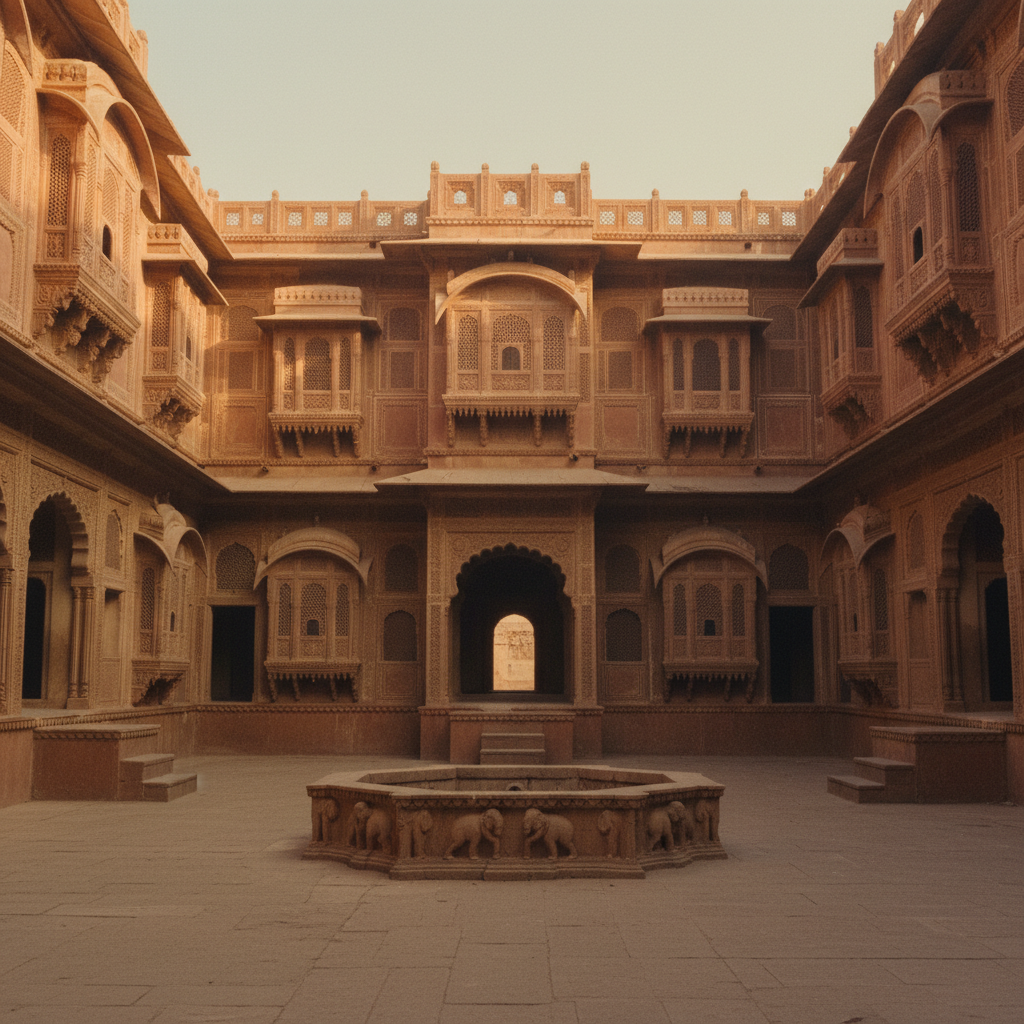
Est. 1962
Our house.
Shri Zaveri Lal arrived at Johari Bazaar in the summer of 1958, at the age of seventeen, with a small roll of drawings tied in a cotton cloth. He apprenticed for four years with Devkaran Sethi, the last of a line of Mughal-era karigars who worked only in polki and kundan.
In 1962, with a loan of eighteen hundred rupees from his elder brother, he took a two-table workshop in a side lane of Johari. He called it Zaveri & Sons, though his first son was born only eleven years later. The name was a wish.
For sixty years we have been making jewellery one piece at a time, by hand, in this city. We now employ forty karigars. Our eldest artisan, Manohar-ji, has been with us since 1974. Our youngest apprentice started last winter.
We do not chase fashion. We have not opened a chain of stores. We have resisted the temptation to cast, machine, or outsource. A Zaveri & Sons piece is the same piece it would have been in 1962, in every way that matters.
We make jewellery that your daughter will wear, and your granddaughter will inherit.
Timeline
Six decades, by our hands.
1962
Two tables in Johari Bazaar
Shri Zaveri Lal opens a small workshop with a loan of Rs. 1,800 from his elder brother.
1978
First royal commission
A bridal set for a princess-born bride of Jodhpur. The piece is photographed and travels into our archives.
1991
The second generation joins
Rakesh Zaveri, eldest son, joins the atelier at 19. He brings the gemology rigour we still use today.
2004
Atelier expands to twenty karigars
A new courtyard in the old city, a dedicated meenakari wing, and our first out-of-state delivery — to Mumbai.
2019
Third generation in the workshop
Aarav Zaveri completes her jewellery training in London and joins the family business.
2026
This site. This conversation.
We step online, with the same eight hands behind every piece.
Craft
Eight hands for every piece.
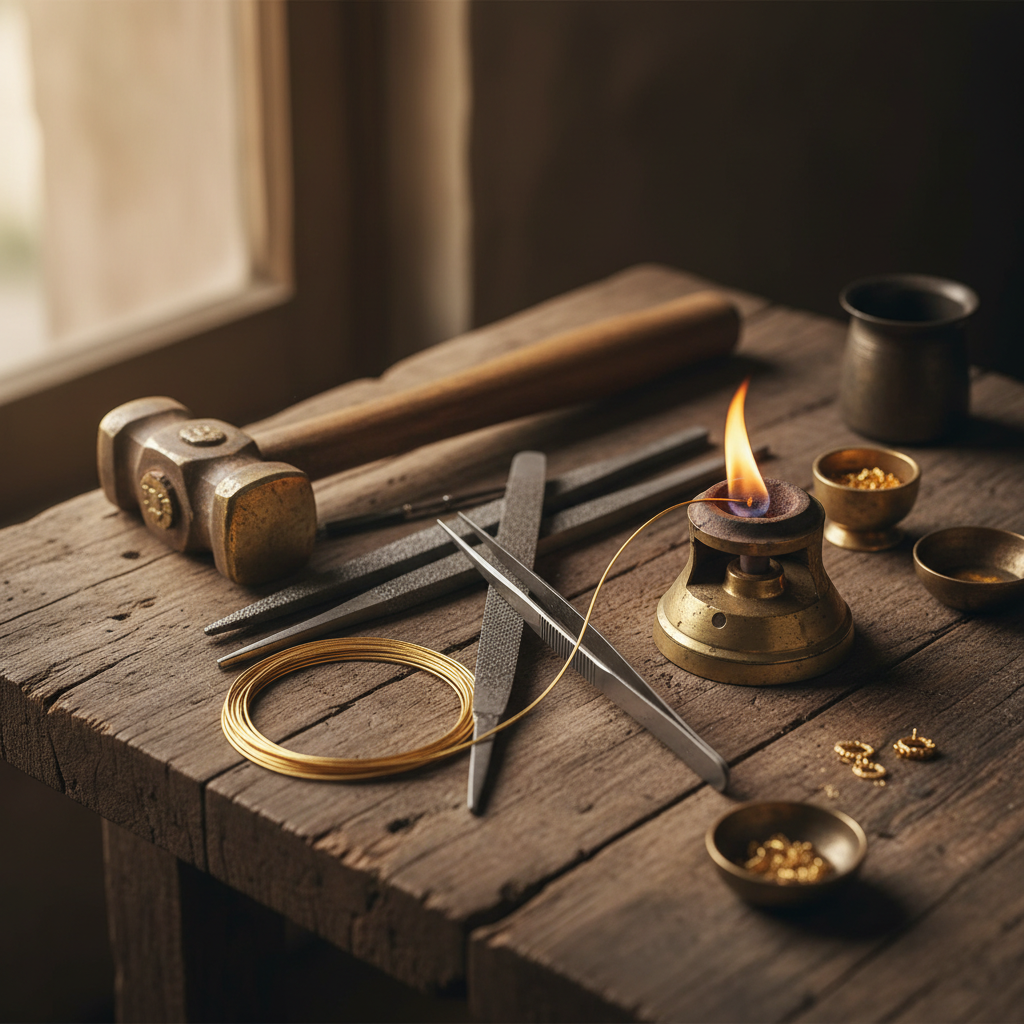
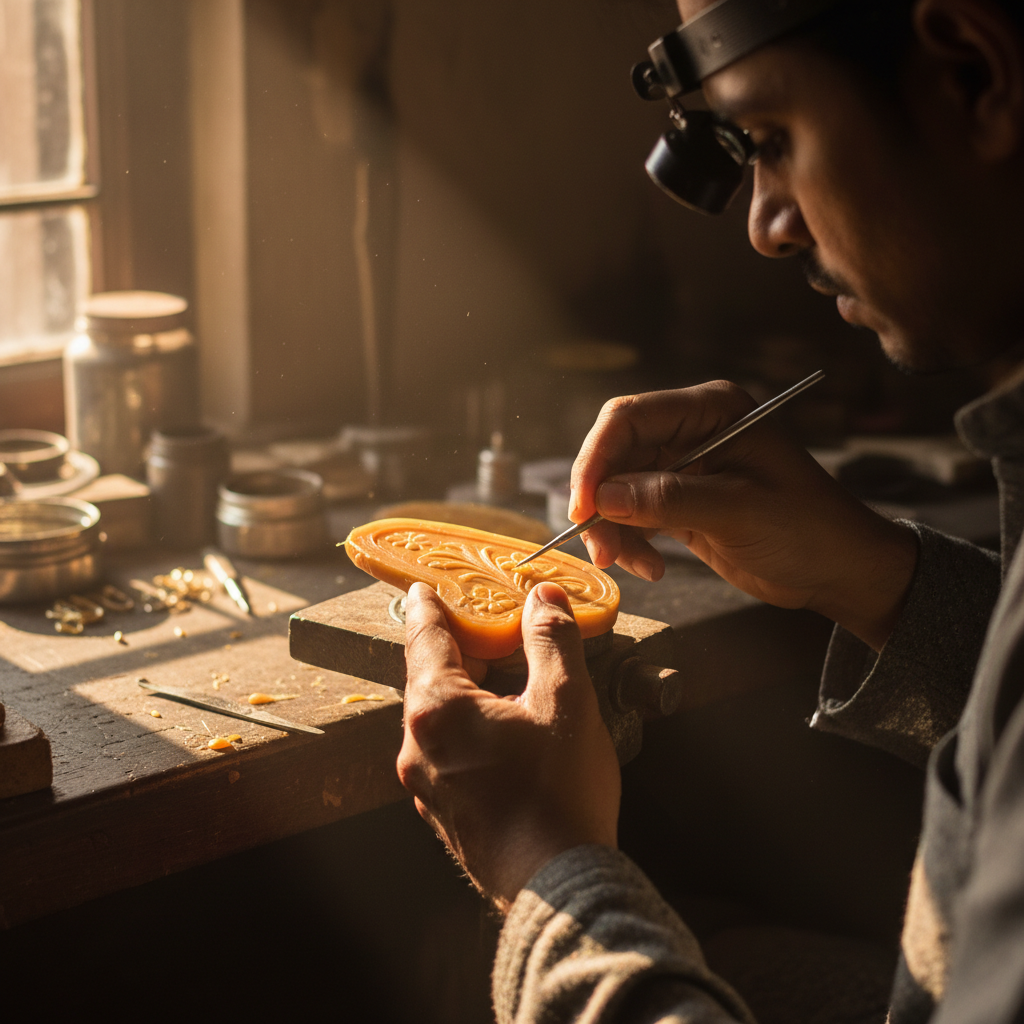
Every Zaveri & Sons piece passes through the hands of at least four master karigars. Drawing, casting, setting, meenakari, polishing. We keep the old process: slow, wasteful, correct.
Walk into the atelier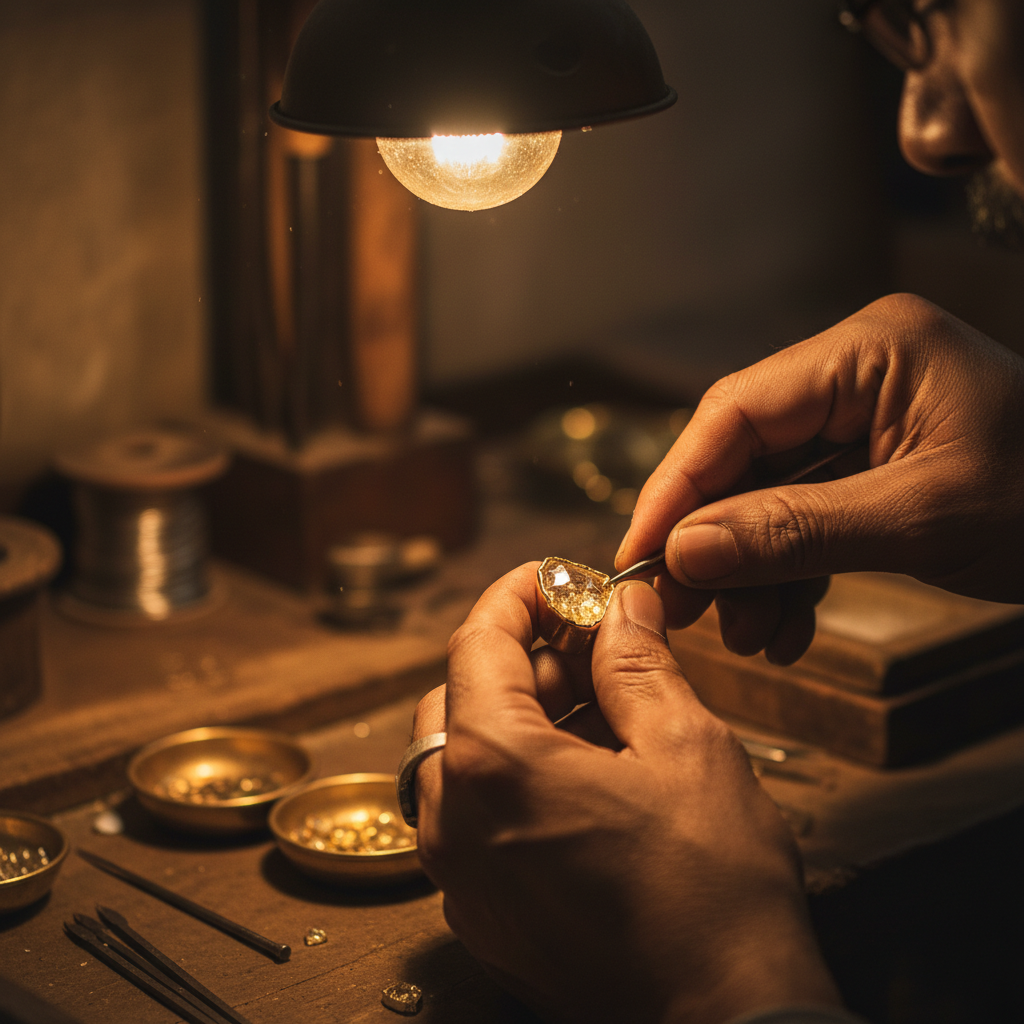
The Atelier Letter
First look, first right of refusal.
Our new collections are offered to letter readers before they reach the showroom. Four letters a year, from our atelier in Jaipur.